Working methods
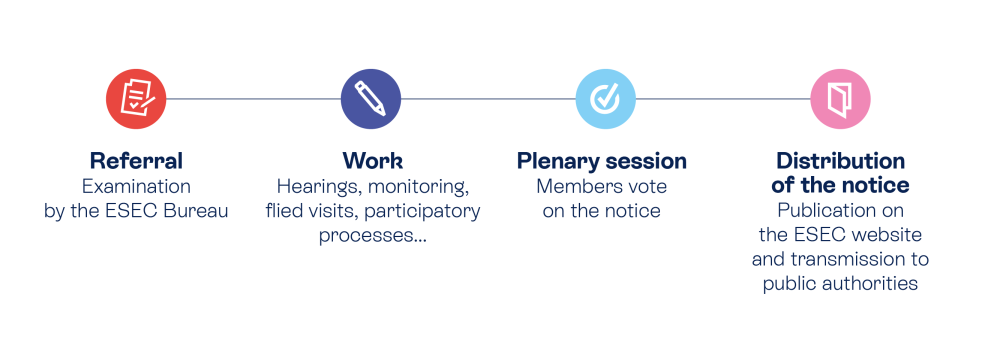
The 175 Council members hold plenary meetings twice a week to vote on opinions submitted by the Commission. The agenda is set by the Bureau. Ministers are informed of relevant opinions, attend plenary sessions and take part in debates.
ESEC working groups include Commissions, delegations and temporary commissions. Each is tasked with preparing studies and draft opinions within their respective field as established by decree.
4 works stages:
- The referral
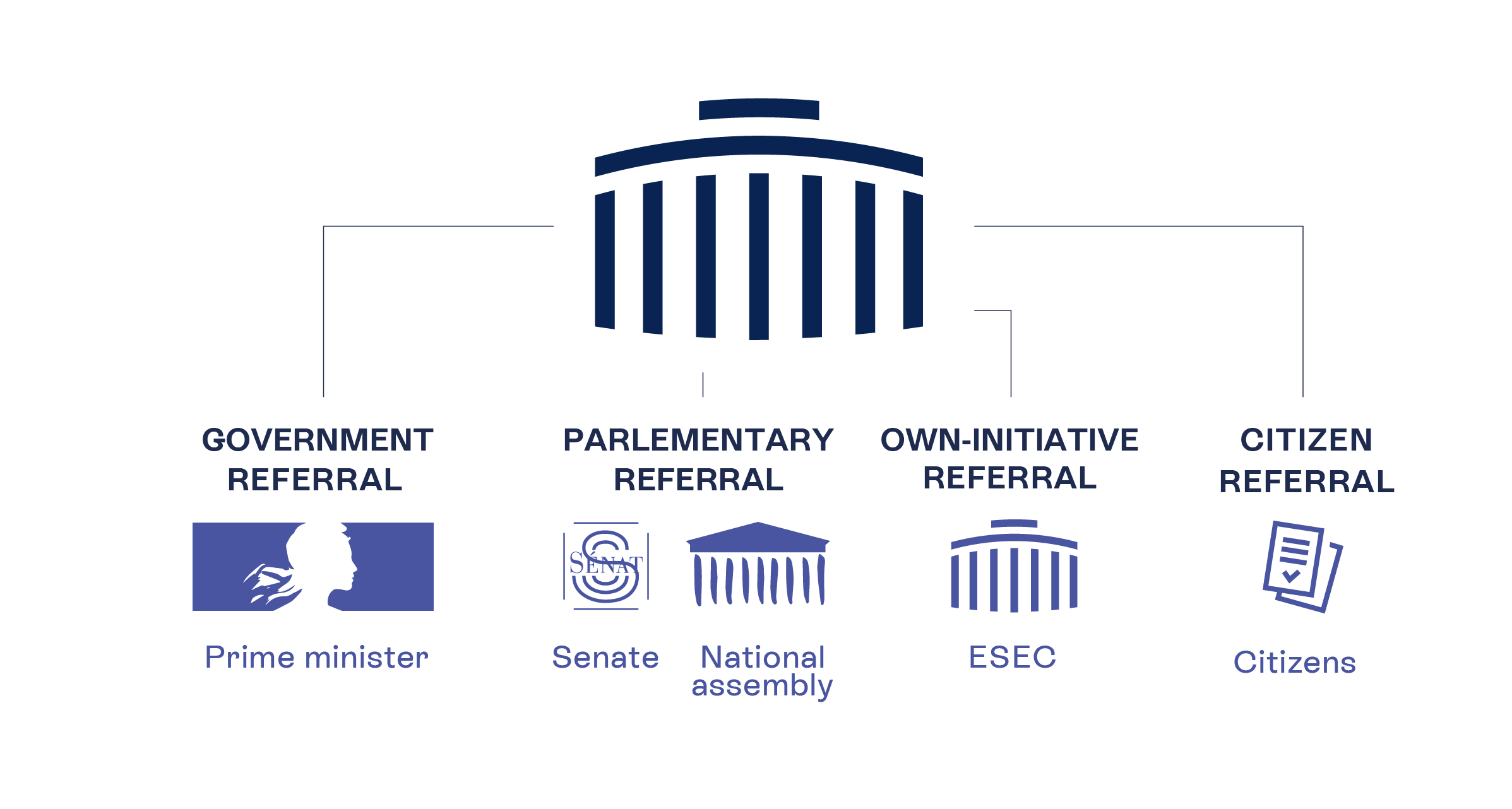
A referral is the starting point for the work of the members of the ESEC. The Council can be approached by the Government, the Parliament, citizens’ petition or can even self-refer a topic in order to deliver an opinion, a report, a study or a resolution.
Once a referral has been made to the ESEC, the Bureau examines it. It decides which working group will deal with the referral, the date on which the work will be completed and the type of report that will be produced (opinion, declaration, study or resolution).
- The start of work
The working group responsible for the referral appoints 1 or 2 rapporteurs. The rapporteurs are the spokespersons for the working group. They organise, lead and supervise the work and debates until the vote. Leading specialists in the subject area are interviewed in order to shed light on the reflections.
- Plenary session
Following the hearings, the debates during which common positions are discussed and defined, the drafting of proposals that have achieved a consensus within the working group (through an internal vote), the draft is presented and submitted to the vote of the ESEC council members during the plenary assembly
The opinion will be presented at a plenary session and then voted on by all members. Once voted on and adopted, the opinion becomes the ESEC's official position.
- Dissemination of the opinion
Once the opinion has been adopted, it will be published on the ESCE website and forwarded to the public authorities. The opinion's rapporteurs will be responsible for presenting and sharing their work in the public debate and with the public authorities.