Governance
The Economic, Social and Environmental Council is headed by the ESEC President, assisted by the Bureau and the Secretary-General.
The President
The President is elected by secret ballot of all members at a plenary session.
The President is responsible for overseeing the work of the Council and ensuring that it runs smoothly. He works with the Bureau to determine the main points of interest and the general strategic direction of the Council. The President convenes the Bureau, chairs its meetings and sets the agenda. He also calls plenary assemblies.
Claire Thoury, President of the ESEC
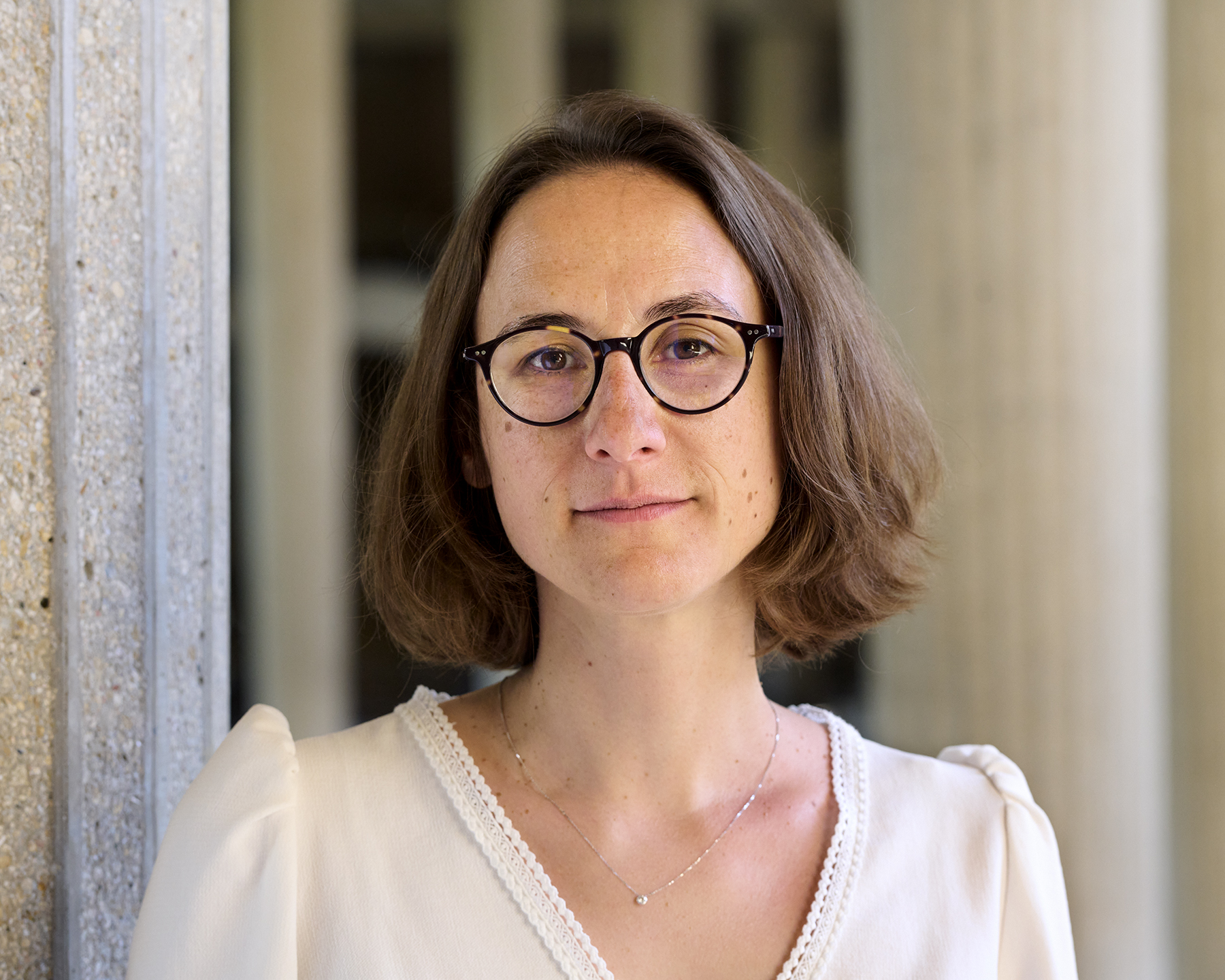
A nonprofit sector leader, sociologist and specialist in civic engagement and democracy, Claire Thoury was born on 27 May 1989 in Soissons. She studied communication and media at Sorbonne Nouvelle University, where she completed a bachelor’s degree followed by the first year of a master’s programme. She then earned a master’s degree in political and social communication from Paris 1 Panthéon-Sorbonne University. In 2017, she completed a PhD in sociology with a thesis entitled “Student Engagement in an Age of Individualisation: Identity Formation and Political Trajectories”.
Claire Thoury became involved in university and nonprofit life at an early stage. She served successively as Student Vice-President of Sorbonne Nouvelle University in 2010 and 2012; adviser to the Deputy Mayor of Paris responsible for higher education from 2013 to 2014; member of the committee responsible for developing a National Strategy for Higher Education and Research from 2014 to 2016; and member of the Youth Policy Advisory Council from 2017 to 2022. From 2017 to 2021, she was Executive Director of Animafac, a national network bringing together 4,000 student associations. In April 2021, at the age of 31, she was elected President of Le Mouvement associatif. As head of this national representative body for France’s 700,000 nonprofit organizations, she advocated an ambitious policy for the nonprofit sector and warned of the funding crisis affecting associations and directly threatening freedom of association.
Since 2023, Claire Thoury has taught at the École normale supérieure as part of its Democratic Studies Programme, where she holds the practice-based chair in “Citizen Participation and Democracy”. In 2024, she joined Crédit Mutuel Alliance Fédérale’s Institute for the Environment and Solidarity as a project manager responsible for social and governance issues.
She was appointed to the Economic, Social and Environmental Council (ESEC) by Le Mouvement associatif in 2021. During her first term, she served on the Economy and Finance Commission and the Delegation for Women’s Rights and Equality. She also chaired the Temporary Commission on Democratic Participation and was rapporteur for the 2024 Annual Report on the State of France, entitled “Overcoming the Democratic Crisis”. From 2022 to 2023, she chaired the Citizens’ Convention on End-of-Life Issues, which brought together 184 randomly selected citizens. Following this process organized by the ESEC, the Government and Parliament began considering legislative changes, including the creation of a right to assisted dying.
In 2026, she was appointed to serve a second term at the ESEC. Backed by the nonprofit sector, several trade unions and stakeholders from the social and solidarity economy, she was elected President of the Economic, Social and Environmental Council on 20 May 2026. She became the first President of the institution from the nonprofit sector and the first woman in its history to hold the position.The current President, Claire Thoury, was elected President of the ESEC in May 2026.
The Bureau
The Bureau is the collegiate body that ensures the smooth running of the Council's work. It is made up of the ESEC President and 19 other representatives.
The Bureau:
- sets the agenda for the plenary sessions
- receives requests for opinions or studies from the Government/Parliament
- proposes the working groups responsible for preparing the ESEC's work.
The Bureau may also decide to set up a temporary commission when several working groups are concerned by the same subject.
The Secretary general manages all the administration of the ESEC and its directorates. With his team, he is responsible for the organisation and smooth running of Bureau meetings and plenary sessions. He also ensures that the decisions taken by the ESEC's governing body are properly implemented.